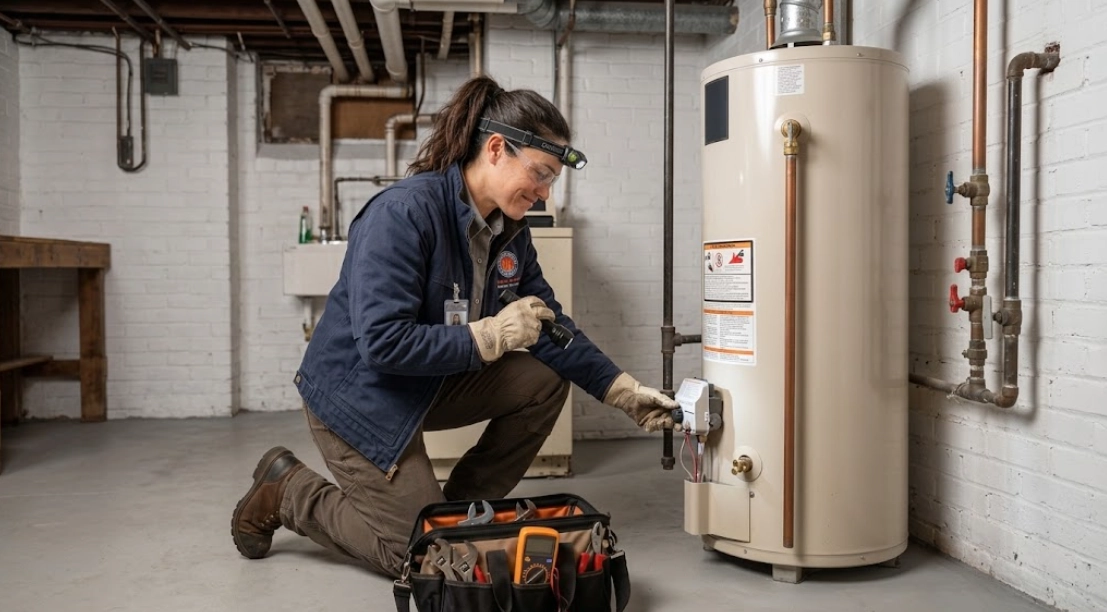
Technical Scope of Water Heater Servicing
Residential domestic water heaters operate under continuous hydraulic pressure, thermal cycling, and municipal chemical disinfection. Over time, calcium carbonate precipitates out of municipal water, depositing a dense insulating sediment layer across the tank floor that causes thermal stress, tank fatigue, and burner overheating.
Professional water heater service encompasses burner cleaning, thermocouple/thermopile testing, gas control valve calibration, dip tube inspection, and annual replacement of the sacrificial magnesium or aluminum anode rod that prevents interior steel lining electrolytic corrosion.
Common Operational Symptoms & Failure Modes
- Short Supply & Rapid Temperature Depletion: Hot water turning lukewarm after only a few minutes, typically indicating a broken plastic dip tube feeding cold incoming water directly to the top hot outlet.
- Deep Rumbling & Popping Sounds: Boiling steam bubbles trapped under calcified sediment at the base of the tank during burner firing cycles.
- Rusty, Metallic-Smelling Water: Exhausted sacrificial anode rod allowing electrolytic oxidation to attack the structural steel tank shell.
- Discharge at the T&P Relief Valve: Water dripping or gushing from the 150 PSI / 210°F Temperature & Pressure relief valve, indicating either dangerous over-pressurization, a failed expansion tank, or a defective valve seat.
Repair vs. Replacement Decision Framework
| Factor | Candidate for Component Repair | Mandatory Complete Replacement |
|---|---|---|
| Tank Age | Under 6 to 8 years old with clean tank shell | Over 10 to 12 years old approaching design lifespan |
| Leak Origin | Brass drain valve, top dielectric nipple, or T&P valve | Puddle weeping from internal steel tank through bottom casing |
| Combustion Assembly | Dirty pilot orifice, faulty thermocouple, or flame sensor | Rusted combustion chamber, cracked flue baffle, or warped draft hood |
NYC Regulatory & Safety Compliance
The NYC Plumbing Code strictly governs water heater installations. Key requirements include:
- Mandatory thermal expansion tank calibrated to match incoming municipal static water pressure on closed check-valve systems.
- Certified vacuum relief valve installed on bottom-fed or side-fed cold supply lines to prevent tank siphoning collapse.
- Rigid copper or brass discharge tubing routed from the T&P relief valve terminating within 6 inches of the floor or an approved drain receptacle.
Verified Network Destinations for Water Heater Repair
Connect with local water heater service platforms in our verified New York directory: